Life Changes
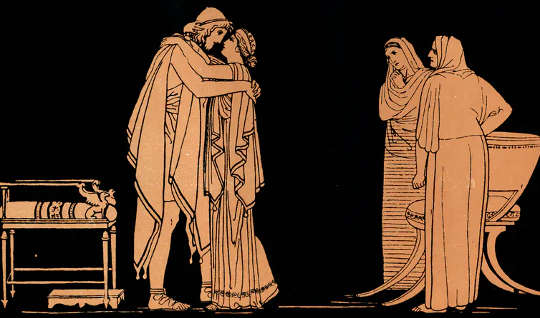
Healing Through Storytelling: Lessons from The Odyssey
The journey of Odysseus in Homer's 'The Odyssey' offers profound insights into healing...









Two Theranos employees – Erika Cheung and Tyler Shultz – spoke out about their concerns regarding the company’s practices, even though they knew they could face lasting personal and professional repercussions.

One of the hallmarks of obsessive-compulsive disorder is contamination fears and excessive hand-washing.

Think back to life before stay-at-home orders. Does it feel like just yesterday? Or does it seem like ages ago – like some distant era?

Living behind a glass wall can be lonely. You can see the others out there, yet you somehow remain separated from them. Your wall may be called "I'm not good enough" or "No one understands me or loves me". These glass walls have a way of magnifying the negative. Yet whatever you see through the wall is only the...
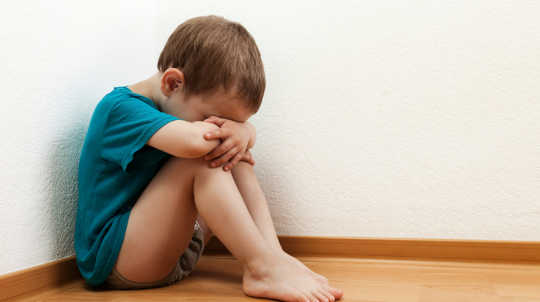
Everyone has experienced guilt at one time or another. In fact, millions of people are burdened by feelings of guilt of all sorts.

Tribalism has become a signature of America within and without since the election of President Trump. The nation has parted ways with international allies, left the rest of the world in their effort to fight the climate change, and most recently the pandemic, by leaving the World Health Organization.

States are beginning to open up their economies after successfully slowing the spread of the coronavirus. Much of the credit for that goes to Americans dutifully following prescribed behavior.

Since Republicans, on average, are five times more likely than Democrats to believe it’s safe now to resume normal business activity, reopening the economy has often been framed as a partisan issue.

What’s important to appreciate about resistance is that it is often not intentional but the result of what’s going on in the more subtle, hidden parts of your unconscious mind. Most people I meet are usually aware of the surface-level results of resistance, but they live unaware of the underlying reasons as to why they resist and end up feeling the way they do.

Even if we escaped getting sick from the coronavirus, we are all sick of staying at home, practicing social distancing and wearing masks.

The media is replete with COVID-19 stories about people clearing supermarket shelves – and the backlash against them.

Have you noticed grabbing an extra bag of chips at the supermarket? Or eating more frozen dinners than you used to? Or even eating snacks that you haven’t eaten since you were a little kid?

Consider the following brain teaser: A bat and a ball cost $1.10 in total. The bat costs $1.00 more than the ball. How much does the ball cost?

The effects of the coronavirus pandemic will be “imprinted on the personality of our nation for a very long time,” predicted Anthony Fauci, director of the National Institute of Allergy and Infectious Diseases.

This is a confusing and, frankly, scary time for a lot of us. There’s so much contradictory information, and the “right” thing to do yesterday is now the “wrong” thing to do today.

Social distancing is both necessary and hard. If my Facebook news feed and anecdotal experience in my own family are at all representative of larger trends, adolescents are especially feeling the pain.
The Dalai Lama caused quite a stir at the 2009 Peace Summit in Vancouver. He said that “the world would be saved by Western women.” His statement received a range of responses, but many women found it empowering, and it catalyzed women-focused initiatives.

During one of my daily walks with my toddler, when we passed his favorite playground, I noticed a new sign warning that the coronavirus survives on all kinds of surfaces and that we should no longer use the playground.

Certain traits of little kids’ play could signal future aggressive and antisocial behavior, researchers report.

With the coronavirus pandemic quickly spreading, U.S. health officials have changed their advice on face masks and now recommend people wear cloth masks in public areas where social distancing can be difficult, such as grocery stores.

Even in normal circumstances, it can be hard to get motivated to do your schoolwork. But these are not normal circumstances.
The journey of Odysseus in Homer's 'The Odyssey' offers profound insights into healing...
Fostering a legacy of joy empowers individuals to inspire authentic self-expression in...
Junk emotions like anxiety, anger, and jealousy can hinder personal well-being and...
Awareness meditation shifts focus from traditional breath techniques to observing...
The exploration of precognitive dreaming reveals a profound interconnectedness within...
Negative moods can linger and affect overall well-being, but identifying their triggers...

A rare celestial formation is quietly reshaping the foundations of everything we know —...
You don't need a week in silence at a mountain retreat to feel spiritually alive again....