
Intuition & Awareness
Attunement and Its Importance in Relationships
Attunement is essential for meaningful connections, allowing individuals to understand...









The most consequential economic force of the next fifty years is not artificial intelligence, climate change, or geopolitical rivalry. It is something far quieter and far more certain: fewer people being born. When a country stops replacing itself, every assumption its economy was built on begins to crack.

On August 19, the U.S. Treasury quietly announced it would at least double the size of certain debt buyback operations, and bond markets moved immediately. Most Americans scrolled past the headline. That was a shame, because hidden inside that dry announcement was a window into how federal money actually works — and why almost everything you have been told about the national debt is at best incomplete and at worst a political weapon aimed directly at you.

More than 70 million Americans now earn income through gig work, yet most conversations about this workforce treat it as a temporary detour rather than a structural destination. Understanding who actually does this work — and why — exposes something important about how the economy has been quietly reorganizing itself for decades. If you are already in the gig economy or considering it, the difference between thriving and merely surviving comes down to strategy, not luck.

Somewhere tonight, an elderly person is lying in a nursing home bed waiting for help that is not coming. Not because the staff is lazy. Not because the facility forgot. But because there is no one left to come. That is the reality unfolding across America right now, and the policies driving it are only accelerating.
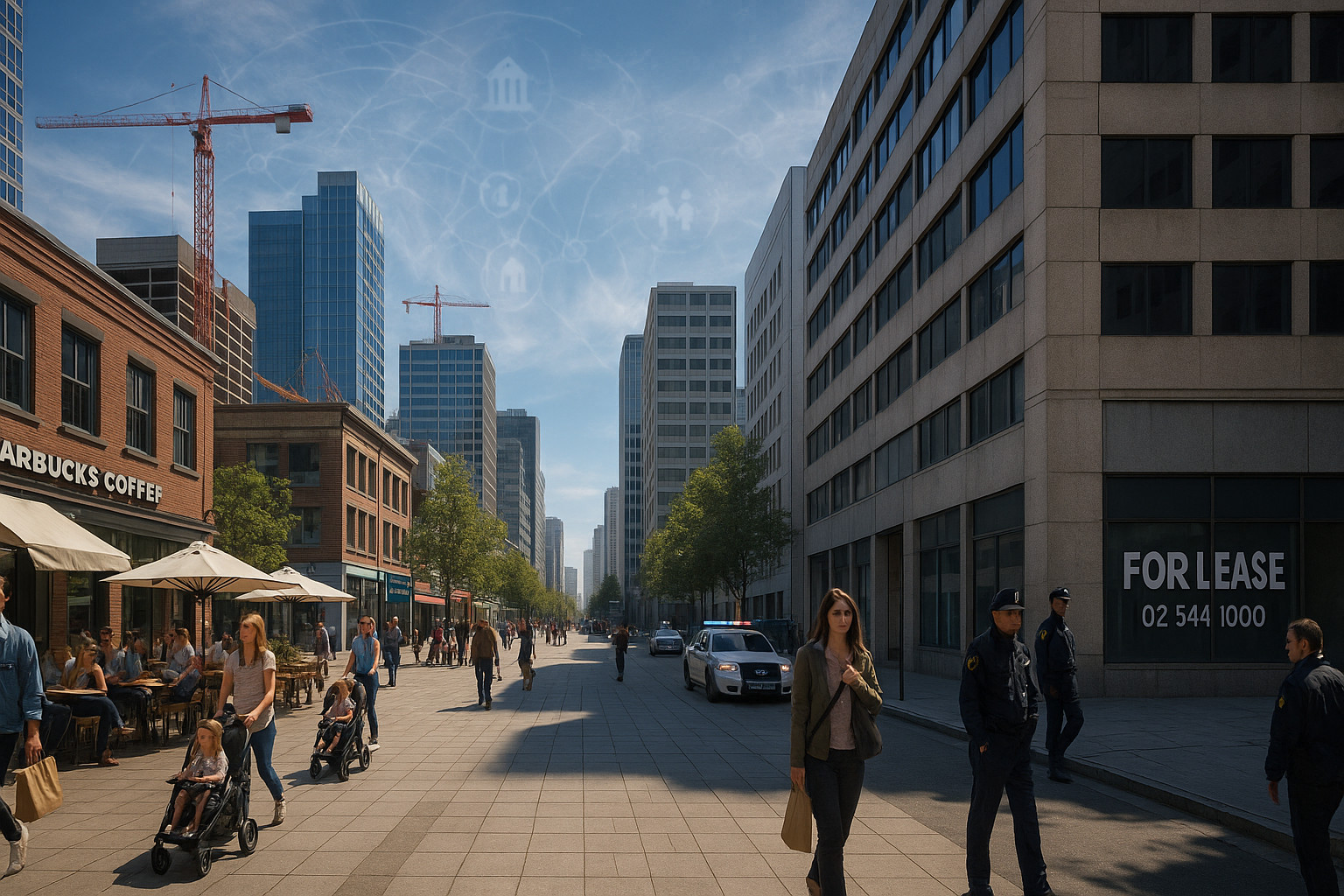
Imagine a business owner who buys cheap equipment to save money this quarter. Six months later production slows, customers leave, and the employees follow them out the door. We would call him a poor manager, yet governments make this exact kind of decision every single day and call it leadership.

Most people have been taught that the fastest path to economic growth runs through the wealthy -- give investors more money, and prosperity will eventually trickle down to everyone else. But decades of evidence and the basic mechanics of how markets actually function tell a very different story. Real economies are driven by customers, not capital holders, and understanding that distinction changes everything about how you see growth, policy, and the future.

Across the 2026 Democratic primaries, something the party establishment did not plan for is happening in plain sight. A 29-year-old attorney knocks off a 30-year incumbent in Colorado. A democratic socialist wins New York City's mayoralty. Progressive insurgents topple entrenched moderates from Maine to California. This isn't a wave. It's a reckoning, decades in the making, and it is finally breaking the surface.

A strait 33 kilometers wide at its narrowest point carries roughly 20% of the world's seaborne oil and LNG — and when it closes, the bill doesn't get sent to the generals who ordered the strikes. It gets sent to the family filling up the tank, buying groceries, and wondering why the mortgage payment feels heavier this month. The U.S.-Israeli strikes on Iran that began February 28, 2026, have set in motion an economic chain reaction that is still accelerating, and understanding its mechanics is the only way to see where it ends.

You have probably never stood in the cereal aisle and thought 'am I truly free right now?' But the question of whether your choices are genuinely yours runs deeper than philosophy classrooms and academic journals. It turns out that most ordinary people, when asked directly, believe they are free and responsible for what they do, even in a universe where causes and effects chain together like dominoes.
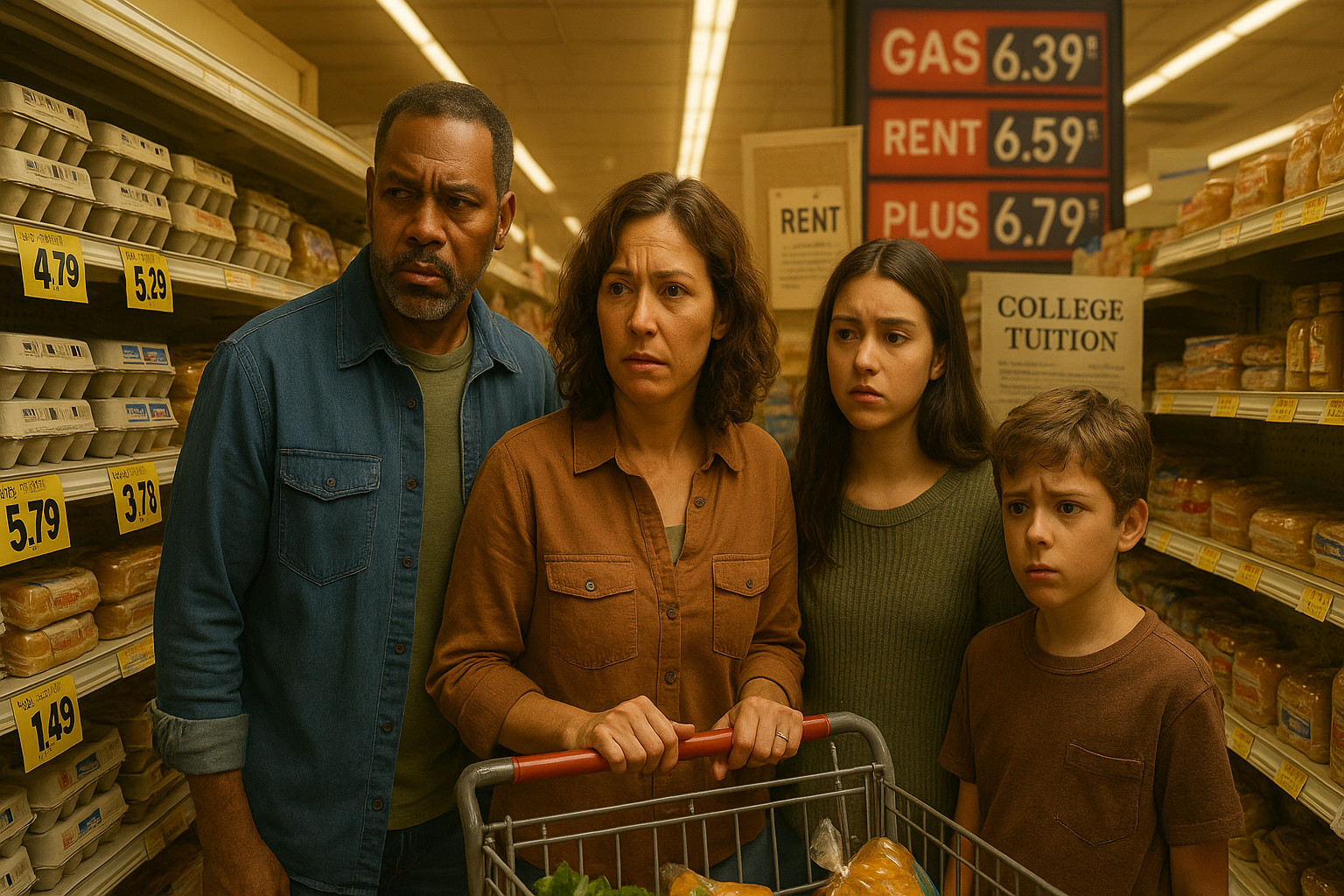
Inflation is the word everyone uses and almost no one fully understands. Your grocery bill goes up, the news blames the Federal Reserve, a politician blames the other party, and an economist writes a paper that takes three years to be proven wrong. The truth is messier, more interesting, and more useful than any of them will tell you.
You were never handed this bill. That was the design. Spread across forty-six years and ten thousand ordinary transactions, no single charge ever looked like a policy, but added together they represent the most expensive thing that ever happened to your household. This article is the total, and it runs into the hundreds of thousands of dollars for most Americans, and well past a million for many.

The concept of universal basic income (UBI) is gaining traction globally, with pilot programs underway in Finland, Canada, and the Netherlands. While it promises economic security, crucial questions arise about its impact on community solidarity and social bonds, as well as the risk of reinforcing individualistic values. Understanding these dynamics is essential for its successful implementation.

Studying abroad offers students significant advantages in the job market, enhancing critical thinking, communication skills, and cultural awareness. With increasing funding and diverse program options, more students, especially minorities, are seizing these opportunities to boost their employability and gain valuable international experience.

My yard man understood inflation in sixty seconds, but the financial press establishment has spent months obscuring what any working person can grasp immediately: the difference between year-over-year and month-over-month inflation tells you whether prices are stabilizing or accelerating dangerously.

A blockade of the Strait of Hormuz would disrupt one-third of the world's seaborne oil trade overnight. If geopolitical tensions in Iran escalate to that point, your grocery bill, gas tank, and retirement account won't wait for diplomatic solutions. Understanding the mechanics of this risk isn't pessimism—it's financial literacy.
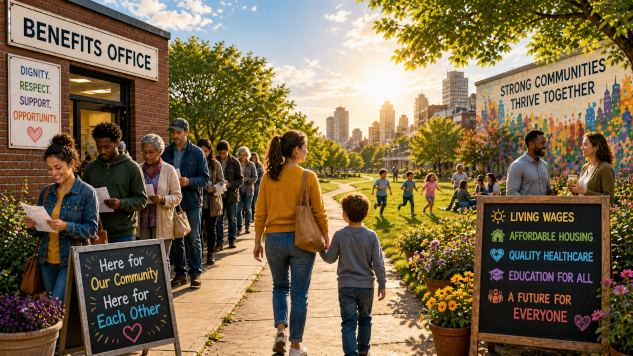
We like to think of welfare as compassion—food stamps, rent relief, and heating aid helping people through hard times. But if that were enough, why does the need keep growing generation after generation. Maybe the problem is not that we have too little welfare, but that we built an economy that depends on it. The question is not how to fix welfare, but how to make it unnecessary.

America spends more on health care than any other nation, yet the costs keep soaring and too many people still lose hope. The $2 trillion question is not simply about money, it’s about the choices we make when suffering becomes a commodity.

Rural America is losing its hospitals, its affordable housing, its farms, and its schools , not because of immigrants, not because of urban elites, and not because of woke ideology. It is losing them because of specific budget votes cast by specific legislators who then turn on Fox News and Newsmax to make sure you are angry at someone else before you can do the math. Fox News's own lawyers argued in federal court that their audience does not expect factual accuracy from their hosts. That entertainment product, engineered to generate outrage, is the single most important political force in rural America today. And it is working perfectly.

Most market analysts are asking the wrong question. They're debating whether we're in a bubble, scanning charts for the next 10% correction, arguing over Fed policy like it's the only variable that matters. Meanwhile, they're missing what might be the biggest structural shift since the steam engine changed everything. If this market peak is what it looks like, we're not just watching another bull market die. We're watching the slow-motion end of a 250-year experiment in pretending Earth's limits don't exist.

You're working. Maybe two jobs. Maybe your spouse works too. You budget. You plan. You cut back. And still, by the end of the month, the numbers don't add up. Rent takes half your income. Groceries cost twenty percent more than last year. Your kid needs braces. The car needs fixing. Health insurance went up again. You're doing everything right, and you're still falling behind.

What's happening to independent publishers didn't start with Google. It didn't start with algorithms or AI or any particular piece of technology. It started in the 1980s when two deliberate policy changes rewired how American corporations operate. One killed the rules that kept monopolies from forming. The other changed how executives get paid. Together, they turned extraction into the most profitable corporate strategy in nearly every industry. Understanding this explains why airlines, banks, food companies, and tech platforms all consolidated the same way—and why forty years of both parties did nothing to stop it.
Attunement is essential for meaningful connections, allowing individuals to understand...

Many people believe that changing jobs, partners, or locations will resolve their...

We are the only species on Earth that buys books about how to raise our young. Every...

For weeks, Venus in Virgo has refined your values, boundaries, and priorities. Now it...

What if the way you think is quietly shaping the experiences you have every day? Through...

The pervasive belief in inherent unworthiness shapes self-perception and societal...

A recent study reveals stark racial differences in why young adults continue to live...

As the costs of assisted living and nursing homes soar, many individuals seek to age in...